Real time in industry does not stop at the network
Real-time connectivity is usually discussed in bandwidth and latency. On a production site, the only delay that counts runs from a machine drifting to the hand that corrects it.
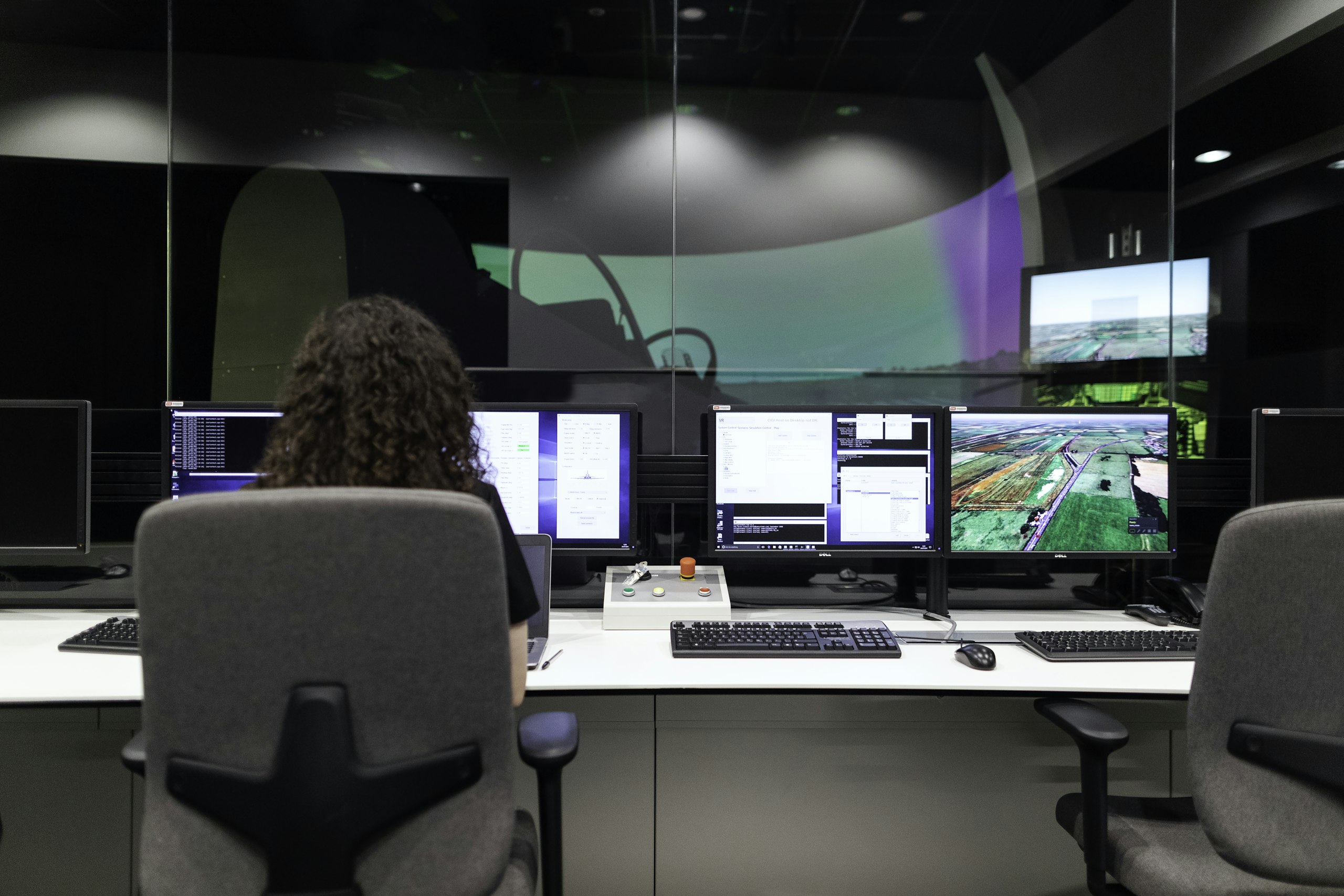
Photo: ThisisEngineering / Unsplash, Licence Unsplash
A fast network guarantees nothing on its own. Between the moment a machine begins to drift and the moment someone acts, the data crosses four stages, and the network is almost never the slowest of them.
What real-time connectivity actually covers
It describes what a piece of equipment can do with a measurement without perceptible waiting: take it, carry it, use it. That calls for infrastructure built for the purpose: low-latency networks, edge processing, machine-to-machine protocols. It calls above all for the measuring devices, the computing resources and the screens that display them to work at the same tempo, failing which the slowest link sets the pace for everything else.
The four segments of the delay
- Measurement: how often the sensor actually looks at the machine.
- Transport: what the network adds between the shop floor and the place where data is processed.
- Processing: local, at the edge, or remote, depending on how long you accept to wait.
- Reading: the moment a person sees the deviation and decides to do something about it.
The first three can be measured with instruments. The fourth depends on the organisation, on shift patterns, and on how far the alert is trusted. It is usually the one that settles the outcome.
What shortening the delay really changes
An anomaly caught early is an unplanned stop that does not happen. A bottleneck visible while it forms is handled differently from one discovered in the weekly review. And a decision made on today's data is not worth the same as one made on last month's, particularly when supply is unstable.
Three settings where the delay is paid for
- In manufacturing, continuous quality monitoring lets a machine parameter be corrected before the batch is lost.
- In food processing, a temperature drift alert is worth something only if the window for intervention is longer than the reporting delay.
- In maintenance, sensor data announces a failure that has not yet occurred, provided readings are frequent enough to draw a trend.
The question to settle before spending
How much time passes on your site today between a drift and the action that corrects it? The figure is rarely known, and it can be measured without buying anything: take three recent incidents and put a timestamp on each stage. It then shows which of the four segments deserves the investment, and it is not always the one most often sold.