Reading a machine's weak signals before it stops
Mechanical failure rarely arrives all at once. It leaves traces in vibration, ambient conditions and current draw first, provided someone is recording them.
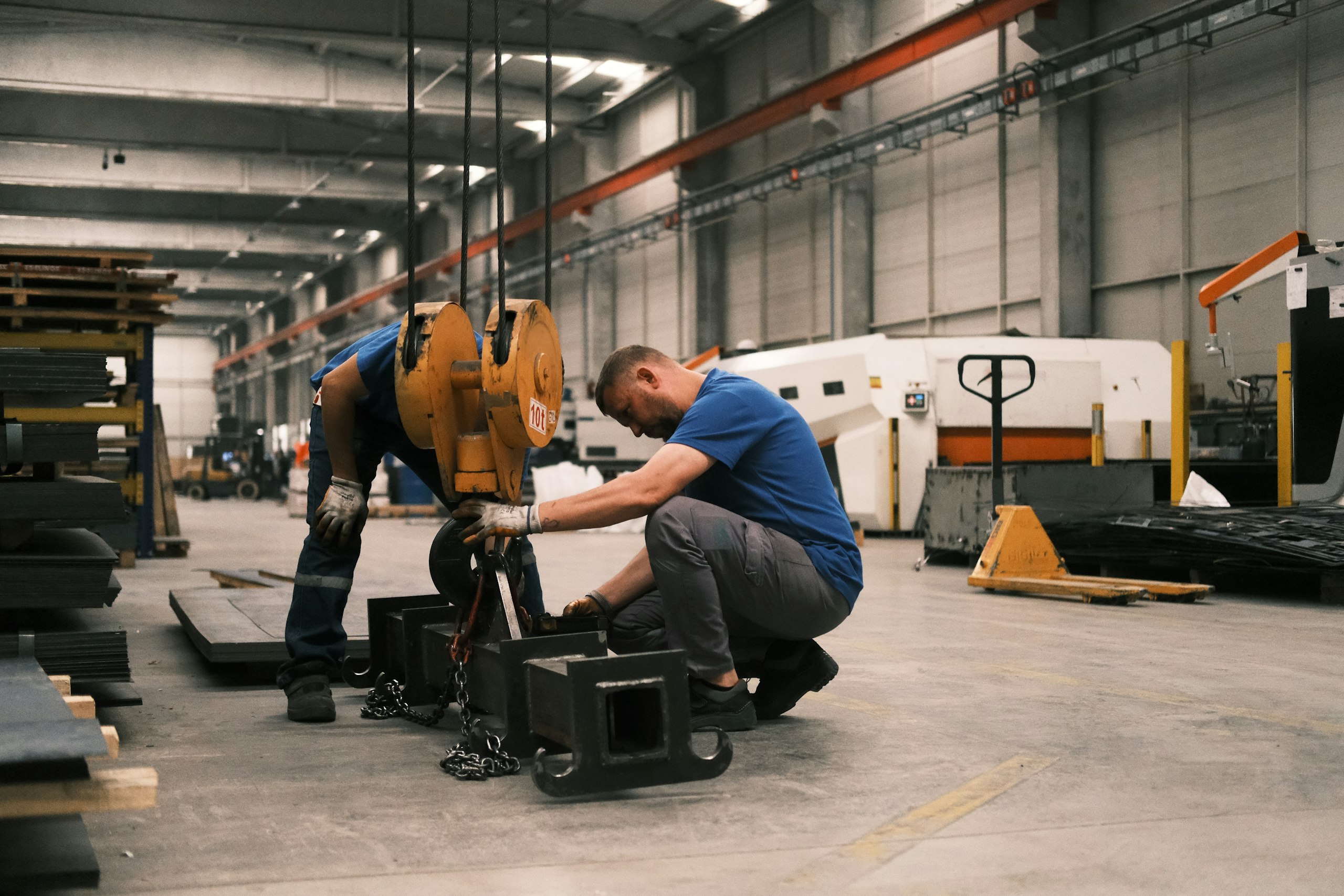
Photo: Cemrecan Yurtman / Unsplash, Licence Unsplash
Corrective maintenance has one virtue: it asks for no decision. You wait, the machine breaks, you repair it. Its cost never shows up as a budget line; it shows up in lost production hours and in the parts that had to be ordered in a hurry.
What a weak signal actually is
A bearing wearing out, a shaft drifting out of alignment, an imbalance settling in: none of these faults declares itself on the day the machine stops. Each one alters the equipment's vibration signature first, long before anything becomes audible on the shop floor.
The Sybox records that signature as three values: maximum, mean and variance. Taken alone they say nothing. Tracked over time they expose a drift, and it is the drift, not an absolute threshold, that deserves an alert.
Context matters as much as the reading
The same vibration level does not mean the same thing in February and in August. The Sybox therefore also measures the machine room around it: temperature, humidity, air quality, CO2eq. These readings diagnose nothing on their own; they stop you blaming a bearing for what belongs to a season.
That is the whole principle of working with data: correlating several variables rather than watching a single threshold.
Adding energy to mechanics
A machine under strain draws more current. For sites that want to cross-check mechanical health against consumption, the Syway is an optional remote sensor: it sits near the cabinet, takes current clamps rated up to 500 amps, samples once per second and reports to the Sybox over Bluetooth Low Energy.
Consumption peaks and drifts then become readable in the same place as the vibration data.
What installation asks for, and what it does not
The Sybox carries its own SIM card and sends its data over LTE-M. It never joins the site's IT network: no port to open, no VLAN to create, no arbitration to obtain from the IT department. Its design meets the requirements of the Cyber Resilience Act.
In practice there is no cabling to run and no industrial Wi-Fi gateway to install. You can start with the machine whose downtime costs you most, and fit the next one only once the first has proved useful.