What a technician sees once the algorithm has sorted the signal
Between a maintenance team that wants data and an IT department that protects its network, many projects stop before the first measurement. Here is what changes when the measurement bypasses the plant network.
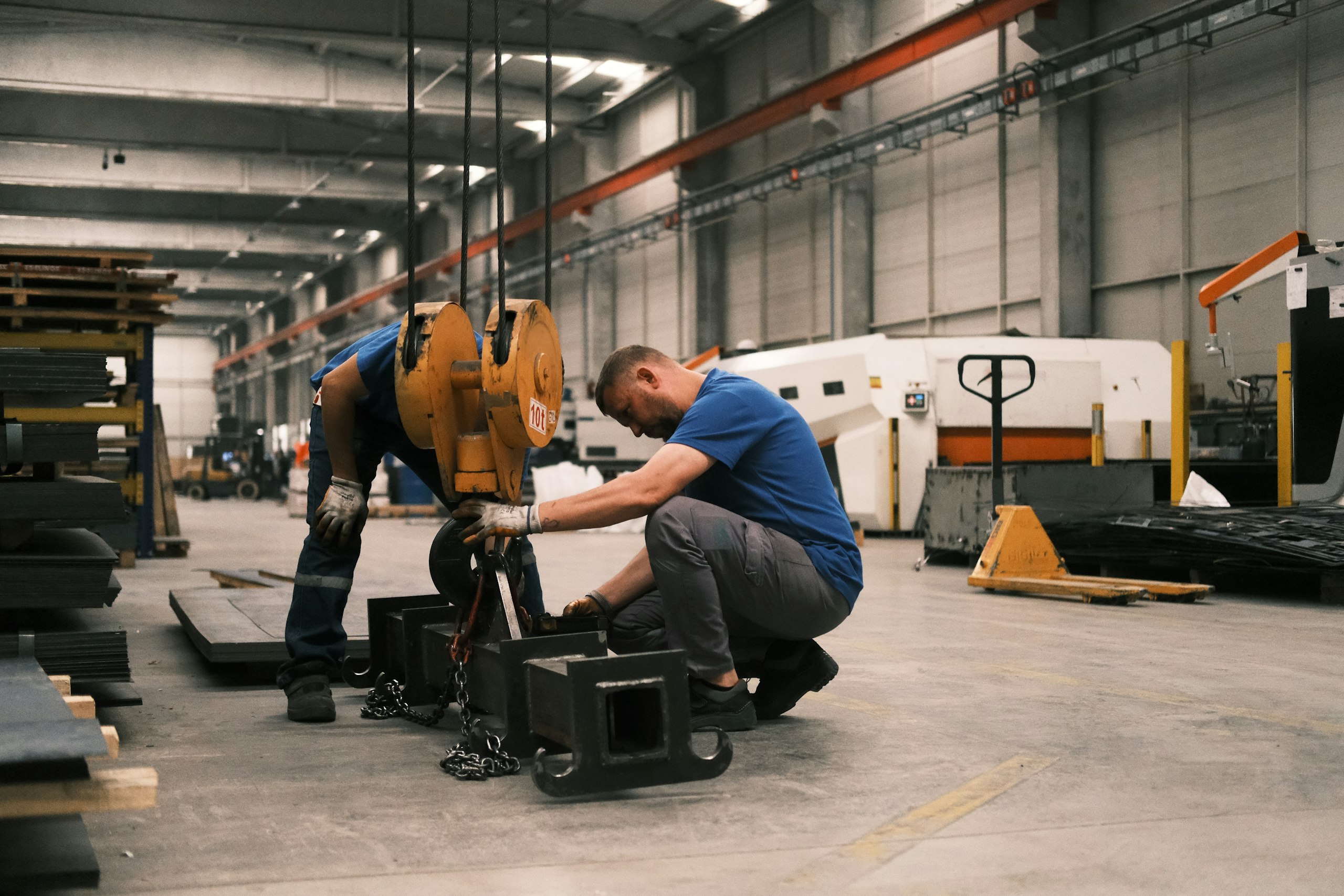
Photo: Cemrecan Yurtman / Unsplash, Licence Unsplash
How many weeks separate the decision to instrument a machine from the first value shown on screen? On many sites the answer runs into months, and none of that time was spent on the machine itself.
The project waiting on a firewall rule
Ports to open, addresses to assign, certificates to issue, and an arbitration between a maintenance team that wants its curves and an IT department answerable for the security of the information system. The disagreement is not ideological: each side is right from where it stands.
A measurement that never touches the local network ends the argument. The Sybox raises its own LTE-M cellular link and asks for no address, no filtering rule and no ticket. Maintenance takes back control of its own tooling without drawing on an IT department that is already stretched.
Installation comes down to a few gestures
- The unit attaches with a magnet or a hook-and-loop strap. No wiring, no power line to run.
- Once placed on the equipment, it starts listening straight away.
- Current clamps snap around the supply cables, up to 500 amperes, without breaking the circuit: consumption is shown live, stored as history and fitted with alerts on excess draw.
- The Syway reports to the Sybox over Bluetooth Low Energy. Pairing happens on its own, with no intermediate step to configure.
From raw signal to diagnosis
That leaves the question rarely put to a supplier: who on the team can read a vibration curve? Data work is not maintenance work, and hiring for it is out of reach for most industrial SMEs.
The processing happens before the screen. The algorithms, causal rather than regression-based, turn the signal into statements the shop floor can act on:
- imbalance, misalignment and bearing failure are named rather than left to interpretation;
- alerts fire on thresholds computed from the machine's own behaviour, not on thresholds guessed at;
- the equipment genuinely at risk rises to the top, which gives the intervention schedule its order.
The technician remains the one who decides and who intervenes. What is gained is the time once spent interpreting graphs, and the grounds to justify a planned stop to the production department.